His work feels like a love letter: an infatuation fuelled by curiosity and need for understanding he’s carried since childhood. It isn’t their monetary value that draws him back again and again to both naturally occurring and lab-grown semi-precious stones as his jewellery language. It’s their identity – wrapped in deep time, in stories and countless timelines that stones seem to hold on to for us. As Hodne prepares his first solo show at Kunstnerforbundet in Oslo, we sat down with him to talk about what, exactly, keeps the obsession alive.
Current Obsession: Olaf, you come from a very specific place in Norway that had a big influence on you and your practice. Tell us about this area and what is the connection between this place, you and stones?
Olaf Tønnesland Hodne: I come from Evje and Hornnes, at the start of Setesdal, all the way in the south of Norway. It’s a very rural place with just 3,000 people. It’s very small, but it has a history of mining, which is an identity marker for the area. Well, it’s not anymore. It’s long gone, but the local people still carry that identity.
CO: What was being mined there?
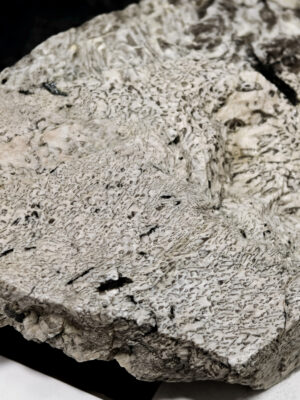
OTH: Mainly nickel, but they found many other rare minerals of pegmatite, like graphic granite and amazonite. But also minerals used in the cosmetic industry – for making toothpaste – or in the building industry, for concrete, and so on. Norway is quite special geologically, we have a lot of different minerals. That also means that we have a lot of Germans coming to us for a sort of ‘geological safari’.
CO: Is that where you first took up stone carving as well?
OTH: I have always been very interested in stones because I never understood how these colours and patterns came to be. But the carving did not start until later, when I moved out of the city to study. However, I think my interest in stone is probably linked to the history of my hometown.
There is one stone carver from the Netherlands who settled in my hometown in the 90s, and he has kept stone carving alive in the region. But I do not think we have much of a history of stone carving in Norway as a field of work. This is something I am researching at the moment.
Even though I never really understood minerals and rocks, I always collected them. It’s quite common for children to collect rocks, but I was trying to understand them in a ‘scientific way’. And I’ve always been drawn to biology and chemistry. But I guess my neurodivergent brain didn’t have the capacity to pursue a scientific path. So instead, I understood it through either collecting or working with them. It wasn’t until later, when I started my art studies, that I took a more research-based approach to understanding material.
I needed to understand how colours are made deep in the dark of the Earth, how the universe is making these connections of elements. But I just couldn’t get it from books. It was too foreign language to me. So I started looking more into the language of materials and what they were saying to me.
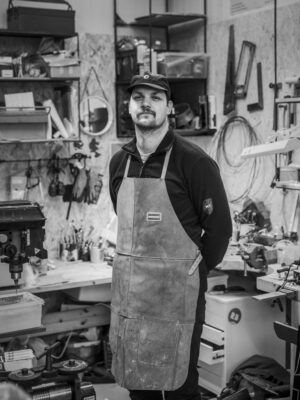
CO: How do you understand the stone now, after all those years of experimenting, looking at it, researching it?
OTH: Well, now I think I understand the agency of elements in a different way. Before, I felt there was a particular way the Western world understands science – separating humans from nature and not looking at elements and materials as something that has an agency, or even movement. We just see them as dead or alive. I never understood this way of thinking, especially when all these elements have their likes and dislikes. They like to connect with other elements, lose or gain electrons, they ‘want’ something and change constantly.
And when I say agency, what I mean is that they’re living in a totally different time from us. This extremely slow, deep time. They move in millions of years instead of the few decades we move in. For me, it’s completely unfathomable, in a way, but I’m also trying to understand this slow time that they’re living in.
‘There was a particular way the Western world understands science – separating humans from nature and not looking at elements and materials as something that has an agency, or even movement.’
CO: Is that perhaps where your initial scepticism about carving and cutting into stone came from? You mentioned that, for you, stone carving was at the beginning almost equal to destroying the beauty of the stone.
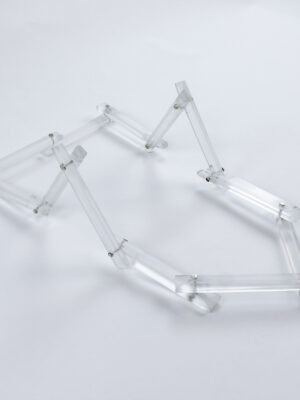
OTH: Initially, I started working with my own collection of rocks because I found them very interesting – the colours, the patterns, and their shapes of how crystal grows. Later, I started incorporating them into my art. During my master’s, I began working with settings. I just made very simple iron settings for the stones.
This was a way of focusing on the stone and highlighting it on its own, uncut. Then I wanted to understand what could I do with the stone? But there was no one there to teach me at KHIO in Oslo. So I just experimented. I cut one stone in two, and it just felt so… In a way, it felt wrong, because I was destroying millions, if not billions, of years of growth, movement and connections the minerals had made. And here I come with a diamond saw and water and just cut it like butter in seconds. But it also felt like I’d opened a book, in a way and that was a wonderful discovery. Now I could ‘read’ things that had happened. Suddenly I could read again, visually, because reading books was always difficult for me when I was younger.
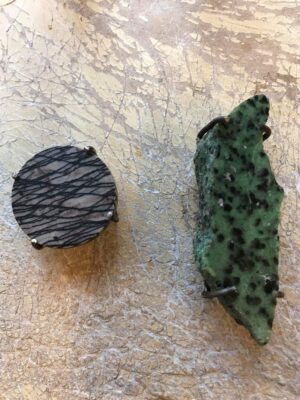
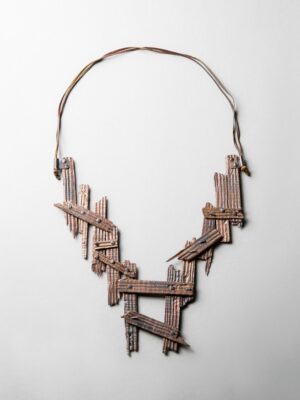
CO: That’s poetic. So, this is your way to read?
OTH: Yes. That was the first step in my understanding of stone. One of the reasons I started working with stone was that I had spent my bachelor’s vacuum-casting wood so that it became copper. Realising I was creating fossils bridged my interest in stone into geology. That fossils-making came from a deep dive and special interest in opalised fossils: fossils that have opal in them.
Opal fascinates me. I love the idea of rocks created over millions of years, in darkness under the ground, that bend light into all colours.
CO: In recent years, we see you making work out of lab-grown stones more and more often. How did the shift to lab-grown stones happen?
OTH: I have a particular interest in lab-grown crystals, and as I don’t look at them through a capitalistic measure of value, they are a wonder to me. I discovered lab-grown quartz during my master’s at KHiO, when I did an exchange programme at Hiko Mizuno in Osaka, Japan, in 2018.
Lab-grown crystal can be produced in different ways, such as hydrothermal crystallisation, where silica powder is put into a liquid in a chamber, with heat and pressure, over months to a year or longer. The results are ultra-fine and clear crystals with the same chemical structure and properties as natural crystals. But the shape is quite different, which makes sense, as crystal growth in the Earth is affected by local impurities and an unstable environment, in contrast to the lab, which is designed to have no impurities and a stable environment.
This had a profound impact on my way of thinking through materials in my craft. It made me think about what happens to a crystal when it doesn’t carry millions and billions of years of history and identity. But then that got me thinking about humans as part of the geology of now – that we are creating gems and our millions of years of evolution is also part of that stone’s history now.
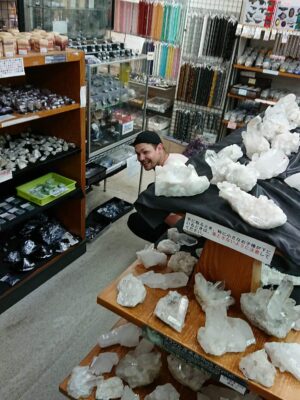
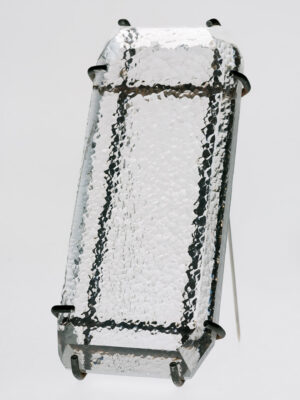
When I visited a mineral collector’s shop in Kyoto, I finally came across the crystal I had been yearning for – a big 2 kg lab-grown quartz. I was perplexed by its square shape and thought it had been cut like that, but it hadn’t; it had grown like that and in just one year. I bought it, and again felt that I could not cut it, so I set it in a 4 mm iron rod and made it into my biggest brooch. The next year, it was selected for TALENTE¹ in 2019.
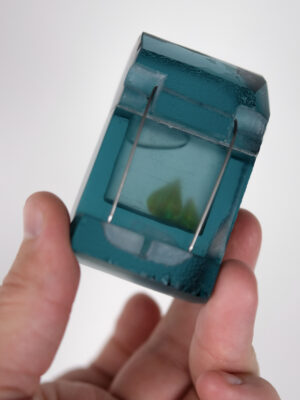
CO: Recently, you made a piece – a stone with water trapped inside. It is inspired by a real phenomenon, the enhydro agate. Could you talk a bit about this work?
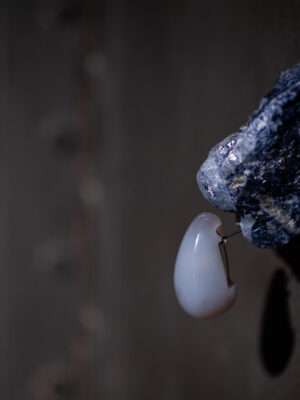
OTH: Yes. Well, when an agate forms in pockets in the rock, layers of agate grow inwards. Sometimes there’s a pocket of air and water inside. The process can stop when there’re no more minerals in the water to form more stone. That’s when the water and the air just stay there – locked, untouched, for millions of years – because many agates are non-permeable: nothing gets in or out. But some do have cracks, so the water gets out. With the ones that still hold water and air, you can see the air bubble move around, and the water sloshing inside the agate, if you cut close enough to see through it. And this is an enhydro agate. ‘Enhydro’ just means encapsulated water.
People have a different connection to water and air than they do to stone. So when they see something moving inside a stone, they can’t comprehend it. And when I tell them it’s water and air from millions of years ago – nothing has changed, it’s been encapsulated the whole time – it’s mind-blowing for many people. For me too, because we have such a strange concept of time.
‘I wanted to get closer to an emotion – or what’s left of it – and to give the stone emotion, through these droplets from different body parts.’
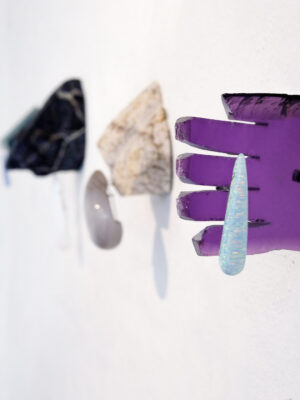
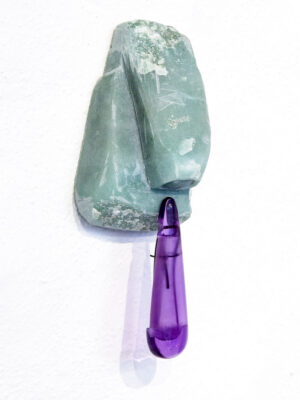
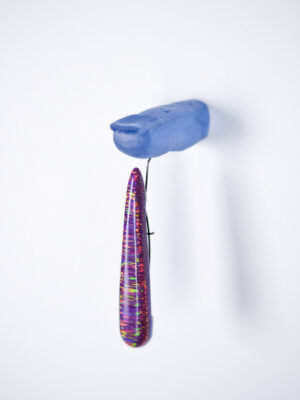
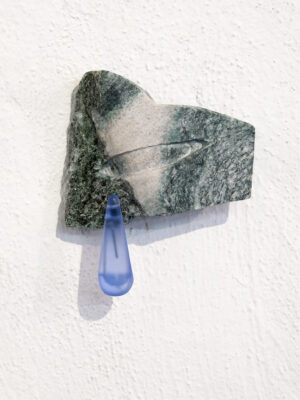
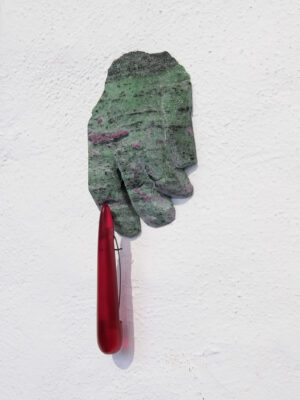
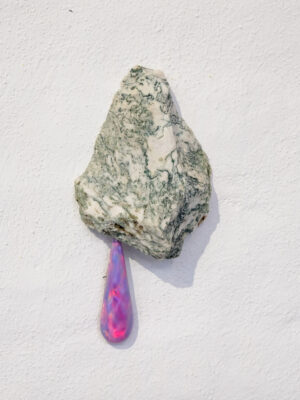
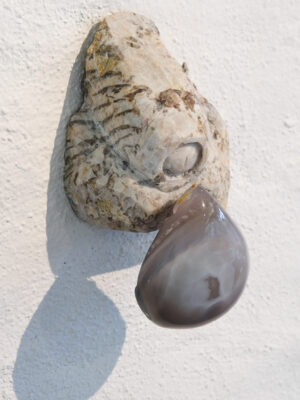
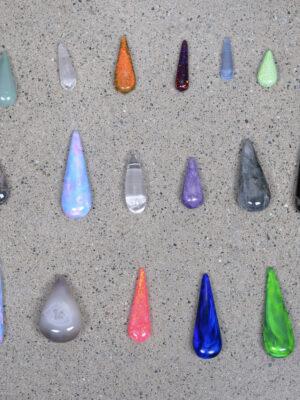
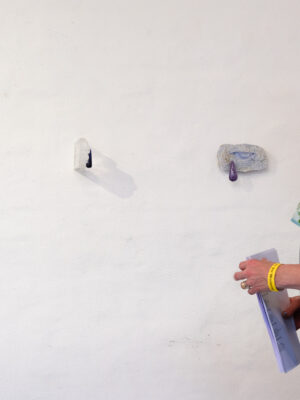
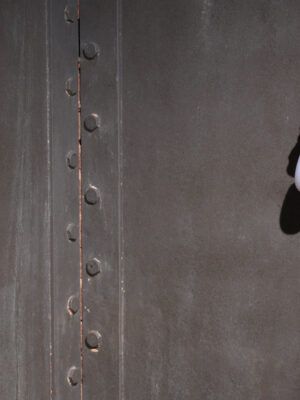
OTH: I have made a few pieces with the actual enhydro agate droplets hanging from (stone) dicks previously in my Munich Jewellery Week 2025² solo exhibition Ooze and earlier, in 2023, at KRAFT BERGEN, with my show Snot, Piss & Tears. I’ve mainly been working with simple shields and windows shapes, but I wanted to get closer to an emotion – or what’s left of it – and to give the stone emotion, through these droplets from different body parts.
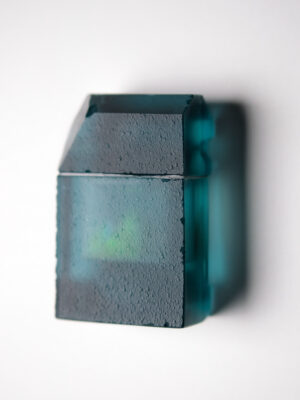
I wanted to try to mimic the enhydro agate as a concept, by carving a lab-grown quartz hollow, cutting it in two, and putting it back together. But I’m still trying to research the best way to do it. So far, I’ve only made one piece like this, which I showed while I was in Japan for the Re:Re: show in Itami in 2025. That one was connected to a theme of sea water and sea waste. In my piece I incorporated the waste I produce while cutting different stones, which is a process that requires water. The stones turn to clay and dust, and disappear into our sewers and into the sea. It was a way of focusing on my own contribution to sea waste.
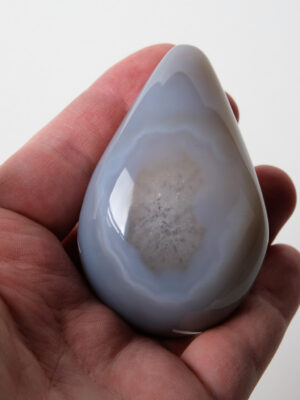
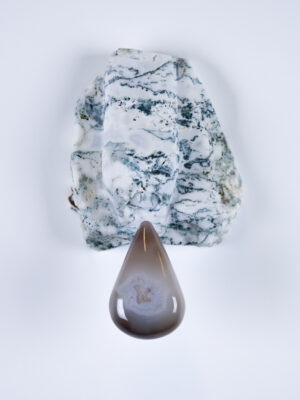
CO: I’m interested in this because we touched on it earlier: the alchemical aspect of your practice. If we think of alchemy as an amalgamation of science and spirituality, it creates an interesting connection to your work. Even though spirituality may not be your primary direction or a direct interest, you often speak about agency and the energy, likes and dislikes of the stone. You are in dialogue with it. You sense it. So, what does this alchemical aspect mean to you? Who is the ‘modern alchemist’ within you?
OTH: I’ve tried to investigate an alchemical way of thinking, but I’ve never fully aligned with it. I don’t feel it reflects how I work or how I understand my process. Mainly because I don’t really know what I’m doing in any fixed sense. Alchemy – the metaphysical or healing world – often comes with a set of rules where A means B, and B connects to C. I don’t see those connections, or I don’t align with that system of guidelines.
Instead, I try to create my own rules – or perhaps not rules exactly. I try to open things up for myself so I can actually understand them. I’m quite inspired by new materialism as a way of thinking, particularly the idea of material agency – removing historic naming systems and fixed definitions and instead creating new words or new understandings. This is perhaps how I work: trying to find other ways of defining materials, other ways of understanding them. From there, I can start making a kind of ‘witches brew’ and begin creating new things.
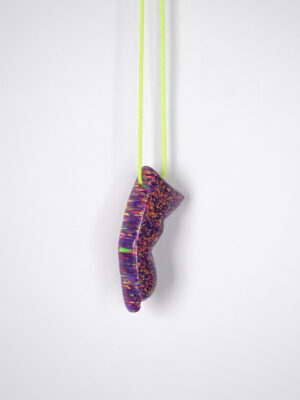
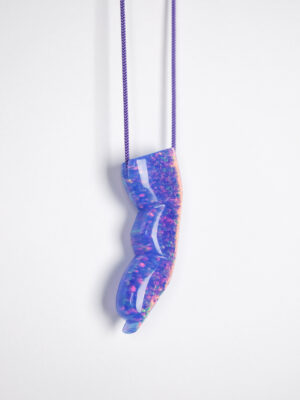
OTH: Even though I might not be interested in metaphysics or healing-stone practices, I’m a sucker for fantasy as a genre, and for witch aesthetics in films like Practical Magic. I eat that shit up! I think I would want to create a coven – a coven of craft.
Regardless, I still come across a lot of healing content and influencer witches on social media, since I like mineral and crystal videos. There was one in particular who said something I found really funny – and quite insightful. I think she was a witch from the US. She said she doesn’t use spells made by other people, because why would you use someone else’s magic when you have your own? In a way, it reflects how I need to work. I can’t use other people’s formulae or definitions. I need to find my own way first.
1. TALENTE München – Meister der Zukunft is an international platform for emerging designers and graduates, organised annually by the Handwerkskammer für München und Oberbayern as part of the Internationale Handwerksmesse. www.ihm-handwerk-design.com/en/talente/
2. Munich Jewellery Week ® is an annual, independent, artist-run contemporary jewellery initiative that brings together creators, collectors and enthusiasts. www.munichjewelleryweek.com/
All featured images are courtesy of the artist.
Olaf Tønnesland Hodne (b. 1990, Evje og Hornnes, Aust-Agder, Norway) lives and works in Oslo. Outside of his artistic practice, Hodne works as an Assistant Professor in the Metal and Jewellery Department at the Oslo National Academy of the Arts (KHiO). He holds an MFA (2017–2019) and a BFA (2013–2016) in Medium- and Material-Based Art from KHiO, and took part in an exchange programme at Hiko Mizuno College of Jewelry in Osaka, Japan.