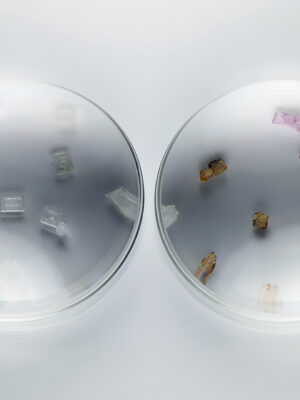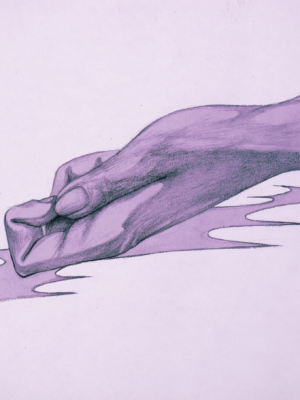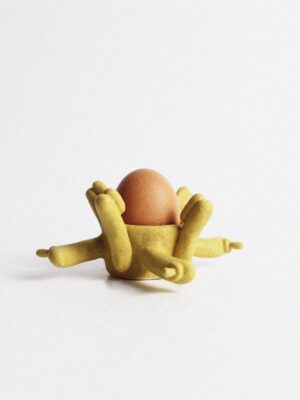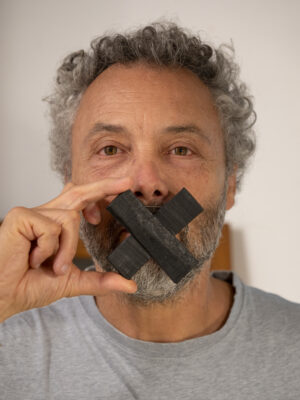
R.I.P. – Rest In Piece is Vilhena’s recent solo exhibition exploring the precarious dance between life and death through the rebellious lore of pirates. For Vilhena, jewellery is a vehicle for storytelling, reminding us that we are all creatures driven by the stories we tell and the treasures we share. Ahead of the Lisbon Contemporary Jewellery Biennial, we sat down with the artist to learn more about the fascinating story of his journey into jewellery and his unfettered approach to making.
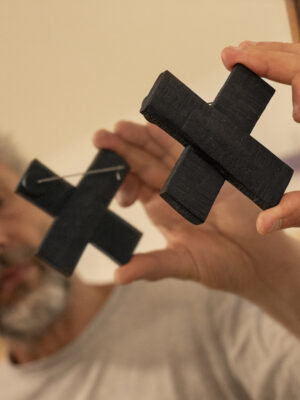
Current Obsession: Your journey into jewellery began with an unexpected encounter that took you to Brazil. Could you take us back to the moment that ignited your practice?
Manuel Vilhena: I was living in London, and one day, strolling through Camden market, I saw these artisans selling their wares on the street. They seemed to be having a very good time, so I stuck around and started a conversation. One of these artisans was a Brazilian with whom I immediately fell in love, and I asked him to teach me. That he did, and for the next year, I was learning and working with him. We sold in markets, festivals, on the street, wherever we could. In those days, people bought a lot and the police were quite lenient… When it was time for him to leave the UK and fly to Brazil, I naturally followed. In Brazil, I lived with him and his beautiful family, where he also later introduced me to his own master, a fantastic craftsman living in the mountains of Minas Gerais. There, I learned to solder and all the basic jewellery techniques and started selling my own work in town squares. Life was good, and the artisan’s way was all I had imagined – freedom. I travelled Brazil from south to north, meeting many like-minded people and exchanging tips and tricks with other artisans.
Yet, feeling the need to learn more, I returned home to Portugal, where I enrolled in a jewellery school.
CO: What, over the years of travelling, learning from other artisans and studying jewellery at a school, became most influential in developing your own artistic language, in your opinion?
MV: After one year at Contacto Directo, the Portuguese school where I learned fundamental jewellery techniques, I went to Italy and worked in a family-owned jewellery store and studio for some years. There, I definitely became what one can call a classic goldsmith. However, I was already making some contemporary work since the Portuguese school introduced us to a contemporary take on jewellery.
After Italy, I applied to the Royal College of Art (RCA), where I took my master’s degree.
There are many factors and especially people that were significantly influential in developing my work. Paulo Marinho was my first master in the artisan master-apprentice tradition. He gave me the love for the medium. Filomeno Sousa and Zélia Nobre were my first jewellery school teachers who introduced me to contemporary jewellery, so to them I owe the twist of fate that brought me from the classical to the contemporary.
MV: Peter Skubic was my teacher for a little over a year, and he just blew my mind and taught me most of what I still use today in terms of quality of the work and attention to detail. He was a big, tempestuous man, full of confidence and energy, and I was somewhat afraid of him, but he had a lovely soft heart and we became friends.
The work of Michael Rowe was what made me decide to apply to the RCA in the first place. I later met him there and, although he was not my teacher, we had many interesting talks about work and life in general.
David Watkins and Onno Boekhoudt complete the school teacher set with two very different approaches and personalities, who helped me shape the way I work and the way I teach.
Renzo Ildebrando showed me that jewellery could be art. The work of René Lalique at the Gulbenkian Museum that I watched in fascination when I was a child, which I watch in fascination still today. My lifelong work companion and friend, Castello Hansen, has, since our school years, always been a source of questioning and consistency in my own work and introduced me to ideas of simplicity and quality – and a lot of fun while doing it. I also admire the work and work ethic of Iris Bodemer and Bettina Dittlmann.
CO: It seems that you have always been in a dialogue through your practice with your peers, colleagues, teachers and surroundings. You also mentioned that you enjoy making custom pieces for your clients for the very same reason – the dialogue initiated by the object.
MV: As an artisan, part of the enjoyment with my work was to talk directly with passing customers. These conversations would take many different forms, but inevitably the person would end up talking about themselves and their relationship with jewellery.
When I entered the contemporary field, that part of the work was taken over by the galleries and I missed it a lot. A few years ago, I wanted to reclaim that and started exchanging a jewel for money and conversation. Basically, the client tells me what they are willing to spend, we have a talk, tea and biscuits, and I make a piece for them, or more precisely, at them (if that makes sense).
So I get to hear their stories and, most importantly, about how they tell me what they do, and in the meantime, I start imagining what would be a good piece for them. I aim to make a piece that changes them in some way, that makes them happier if they seem sad, that makes them quiet if they’re too boisterous, that enhances or diminishes some quality of the person that captures my attention. They don’t know what they will get and that is part of the fun.
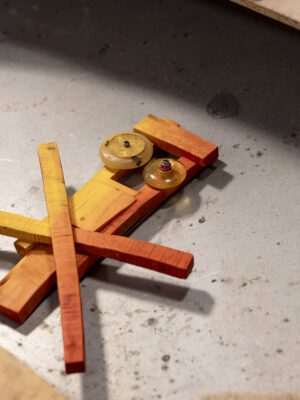
‘It is not that stories are important for my work – rather, my work is important for telling stories.’
CO: Thinking also of your body of work Miss Amelia, would you say that storytelling is important for your process?
MV: As for stories, I printed a little fable for the Miss Amelia and it starts with ‘Story, story, all is story’. We humans are genetically geared for stories. We should be called Homo fabulus instead of Homo sapiens – or Homo digitalis, or whatever we are being called these days. We love stories, we tell them all the time, we learn through stories, we explain through stories, we invent stories and on and on and on. Jewellery, in my case, is just the language I use to tell them. So, it is not that stories are important for my work – rather that my work is important for telling stories.
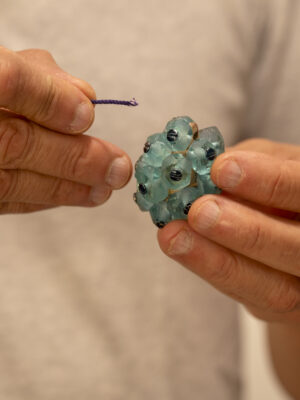
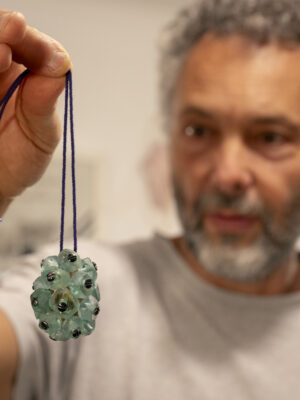
CO: Your practice extends far beyond the bench into art education, notably through the Postcon Project and teaching activities. When did you realise you had this passion for teaching?
MV: My passion for teaching started with my grandmother. She used to have me sit on the carpet near her – she couldn’t walk and many times just sat on the floor on these wonderful big pillows – and would tell me interminable stories and teach me about anything and everything. She had a drawer full of curious objects – and jewels – which she diligently took out, showed me and explained what they were, who had given them to her and so on. She was a very knowledgeable woman who could speak four languages, something that at the time in our Portuguese cultural background was rare. I would sit in awe and soak it all in, always wondering if one day I could do the same. A child’s fatuous wish that lived under the surface until I met Onno Boekhoudt at the RCA. He was a great teacher and we discussed teaching a lot. That was it! I was in love again: this time with teaching. So I started to learn it as a craft and develop it in parallel with my studio work.
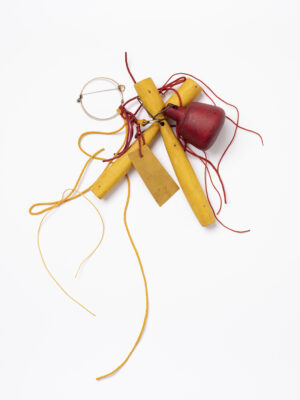
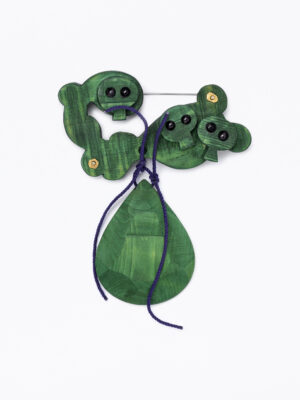
CO: Coming to the present, you are currently preparing for your upcoming solo exhibition at Gallery Reverso. Could you tell us a bit about this new work?
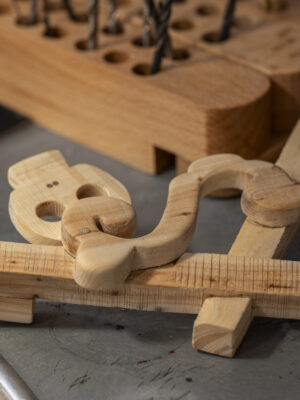
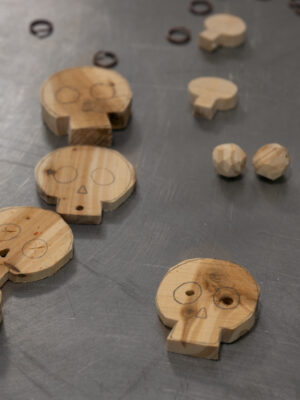
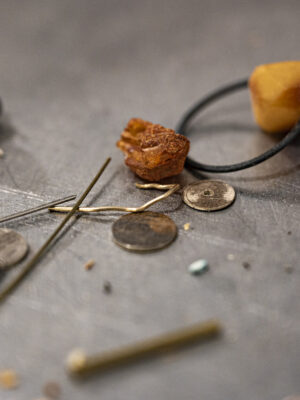
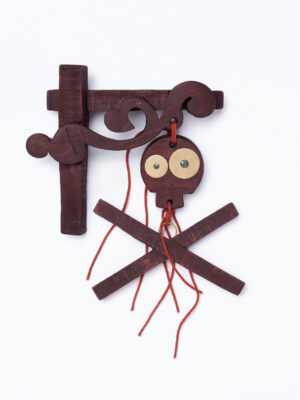
MV: My solo show at Gallery Reverso tells yet another story, this one about pirates, treasures, deep-sea creatures and the constant presence of death in the lives of this untamable and indomitable band of miscreants. The work is loosely based on cartoon aesthetics – something I love – and the plot is fantastic and mysterious, which I also love. There are lots of skulls, bones and some gold teeth, all in good fun. Of course, the pirate lore and reference is a metaphor for how we live nowadays and, above all, a call to be a little bit more like them: not following the system blindly, not succumbing to what they give us for free, not buying expensively ugly cars; rather, creating our own islands where we can have fun and share the loot with our friends. And remembering that death is always present, so we might as well enjoy things as we go along.
CO: Approaching the Lisbon Contemporary Jewellery Festival, what would you say makes contemporary jewellery in Lisbon special?
MV: Lisbon!
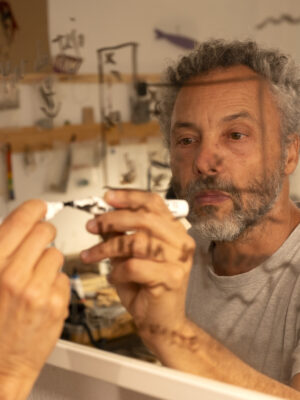
All featured images are the courtesy of the artist and photographer Eduardo Sousa Ribeiro @eduardosribeiro.photography.
For more information about the exhibition R.I.P. – Rest In Piece and details on the full LCJB programme, click here.
R.I.P. – Rest In Piece
Coexistence between life and death in Adventures in the South Seas
Galeria Reverso
Rua da Esperança, 59 / 61, 1200-655 Lisboa
Opening hours during the Biennial:
Tuesday to Friday, 11am to 6pm; Saturday, 11am to 5pm
Opening event:
Opening 23rd, 4 pm to 8 pm
Guided tour:
Saturday 26th, 11am
Exhibition on view until 16 October.