The creative industry is unpredictable, and its paths are rarely linear, yet honest accounts from the artists working in it remain rare. Revisit is a series of in-depth artist interviews looking past the curated image, one conversation at a time – offering an unguarded look at what it actually takes to sustain a creative practice.
For our second instalment, we spoke with an established jewellery maker and long-time friend of Current Obsession, Benedikt Fischer. Amsterdam based and Austrian by birth, his practice takes an alternative approach to the craft: playful creations fashioned from found materials that celebrate technical precision while opening a dialogue on what jewellery is – and what it could still become.
Since our last conversation in 2019, Fischer’s contribution to the discipline has been widely recognised, and this year alone earned him one of the field’s most prestigious international prizes, the Françoise van den Bosch Award. Seven years on, we met again to talk about his road to becoming a jewellery maker, the mystery of staying afloat as an artist, and whether there is a formula for success.
Dominika Szmidt: Could you tell me what you’re working on at the moment?
Benedikt Fischer: When summer hits, I really step out of everything – especially when I go to Austria, where I’m from. My professional side stays in Amsterdam. But thinking it over this morning ahead of this interview, one thing I’m working on is a publication. I’ve been collaborating with the artist Rudy de Gruijl for almost six years now, and I applied for funding to make a publication about this collaboration. It’s a long process, and I have to keep the deadlines in mind. But I’m very excited about it. We have such a large body of work together and it’s good to have a way to show it to people outside of exhibitions.
I also found out I’m receiving the Françoise van den Bosch Award, which means I am invited to make a museum show in about a year. Before the holidays, I had this urge to make things softer somehow. I bought velvet and silk and things like that. I’ve been building large cases and cladding them in fabric. I don’t know if it’s going anywhere. That happens a lot in the studio – I just make things, and later I find out if they end up in the rubbish or in a museum.
DS: The collaboration with Rudy has lasted a long time now. What is it about collaborating, versus working alone, that draws you to it?
BF: If you’re alone in the studio, there’s much solitude. When I work with Rudy, someone is waiting for me – he’s happy to see me, I’m happy to see him, and different things can happen. He’s a very good painter and poet, which I’m not. But I can be precise and finish a piece – I have that skill. So it’s a yin and yang; we complement each other. I enjoy days on my own too, but it’s a different dynamic.
The collaboration was originally meant to last a year, as part of a programme pairing ‘outsider’ artists with designers – mostly from fashion. We’ve just enjoyed it too much to stop. I thought about ending the collaboration with the coming publication, but I like it, and I like Rudy, too much. There were years when we did a lot of work, and now it’s more talking and strolling – he loves shopping and being out in town, talking to strangers. We still create things, but making is not the main focus.
Amsterdam can be a very hostile city – everyone is running after money; it’s very expensive. Everyone is working all the time, so having someone who has time for you once a week, every week, is a rare and generous gift.
DS: Congratulations on the Françoise van den Bosch Award, by the way – that’s a massive achievement. How do you feel about it? Has it changed the way you look at your career, or is it just another step along the way?
BF: It’s a massive honour; I’m very flattered. Paul Derrez was the first to receive this prize, and so many fantastic people have received it since. There are so few prizes out there, especially ones that actually come with money. I can use it to further my practice, which is huge, because it’s genuinely hard to make a living from this work. Everything I’ve made so far has been cheap out of necessity – cheap materials, and so on – so this might give me different opportunities.
I don’t think it’s changed how I look at my career. Maybe at some point.
DS: You started making jewellery quite early, at fourteen, am I correct? Did you always know you wanted to create?
BF: Even earlier, but at fourteen I started training professionally. I went to a technical boarding school in Austria.
As much as you can know these things at that age – it was jewellery or being a gardener, I think. I’m still happy with jewellery. It’s such a great medium – limited in a way, but also endless. I love it. It really suits me.
DS: When you were starting out, did you have a particular image of what success in the field would look like?
BF: That’s funny, because at first you train technically and your goal is to make engagement rings, stone settings, to become a jeweller. I never knew this could be an art form too. It was only when I moved to Vienna, working in a jewellery shop in their basement, that I discovered there was a contemporary jewellery gallery around the corner. When I walked in, I thought, oh, this is also possible with jewellery – this world exists. The owner advised me to visit gallery OONA in Berlin, a beautiful space in Mitte, and it slowly unfolded from there.
I didn’t know you could take jewellery making this far, or be this free with it. Amsterdam also really changed my perspective. So I didn’t have a fixed idea of success at the start.
DS: Was moving from technical making into conceptual craft a smooth transition, or did it take some unlearning?
BF: My teachers were worried that having a technical background would stand in my way – that I’d always default to technical solutions, or that it would block my freedom. It took me about half a year to shake that off. But I’m very glad I have that foundation. I love precision, and I love being able to rely on it when I want to.
DS: You’re also an educator – is teaching a way to gain some financial independence, or is it something you are genuinely interested in?
BF: Both, always. I love the structure it brings and the stability – I think it’s good not to be dependent on your creative work for income. You’d probably make different decisions if you had to live off it; maybe I’d work with gold or other precious materials instead. I don’t have to think about that, which is a huge freedom, and I’m very grateful for it. If it weren’t teaching, I’d do some other job just to have that income and free myself to create how I want.
But teaching is more than just income for me. I really love passing this passion on to younger generations. Watching their process, seeing them grow, learning what they’re passionate about, what their reality is like. It’s its own kind of community, and I enjoy spending time with them, doing things, thinking about things. I love teaching.
For the last few years I’ve been guiding Bachelor 3, which I love. It’s not about following an assignment – the students choose their own topic, and I guide them in figuring out what they want and who they are. I think that’s the most interesting part, and what teaching should be about. It’s not about what I know or want; it’s about them and their own desires.
`Sometimes it’s chance or luck – meeting the right people, being in the right places. But in general, and this applies to me too, I believe in hard work.´
DS: You’ve watched a lot of students leave university and try to build careers. How much of finding a sustainable path in the industry comes down to chance?
BF: There’s no real formula. Sometimes it’s chance or luck – meeting the right people, being in the right places. But in general, and this applies to me too, I believe in hard work. Possibly because I was raised on an agricultural farm. It’s not going to happen if you’re not willing to put in the work. And you can often tell during their studies – are they showing up?
It’s often a switch from the classical school system, where it’s not really about you – you just mirror what’s expected of you – to realising, oh, it is about you, and it’s for you. You’re not obligated to be here. Some students come because their parents think it’s a fun idea to be at art school, live a little, and then get a regular job. But others are genuinely driven, and that helps. If you manage to discover what you’re truly passionate about, it becomes easier to keep going.
I think a lot of people also get eaten up by their day jobs – there’s just too little energy left. That’s much more the reality now than it was for the Boomer generation, who could squat a house in Amsterdam, then squat a studio, get funding or an artist income – those possibilities have mostly disappeared. Everything is expensive now. There’s a huge gap between the generation above me and the generation below me, and I’m somewhere in the middle – I feel like I could still find my way if I really wanted to, still grab some funding and make it work. I’ve had years where I lived pretty shabbily and paid for that freedom in other ways. But that’s getting harder and harder to do.
DS: There’s an ongoing debate about whether there are too many art degrees, and whether fewer students should be admitted given how limited the opportunities actually are.
BF: I don’t think an art diploma was ever a guarantee – even when I was a student, it was always said that only about 3% ‘make it’. It’s a slim chance either way, but it’s a much bigger gamble in art. Artists face more of a societal shift too – I don’t think there’s as much appreciation for the arts now, as there is when economies are flourishing.
When it comes to the reality after school, it’s also on the student to talk to people, go to openings, ask working artists about their lives. I find it surprising how little interest some students have in the field, or in other makers – almost a kind of wilful ignorance. I believe in deep dives – I do it myself, getting absorbed in one artist for as long as it takes to learn everything I can about them.
Art schools often get blamed for not teaching this, but it’s also a matter of personal responsibility. If you want this profession, you have to look around.
DS: Was there ever a point in your career where you wished you’d gone a different way?
BF: For sure. There are months in the studio where I work a lot but nothing turns out, and of course that’s unpaid labour. That can be frustrating; in this profession, the work often doesn’t translate into money. I make pieces I don’t want to price as exclusive masterpieces – always making very expensive, limited work is boring to me, and I want my pieces to go out into the world with a purpose. But the reality is you’d have to charge a lot to make jewellery a sustainable career, and that part isn’t enjoyable.
DS: Is that what you do when you hit an artist’s block or a slump – just keep going?
BF: I change my method, my approach, my dynamic – try to wiggle around until I find it, and try to keep it exciting. Sometimes I also like to challenge myself. At one point I realised I was good at reacting to existing objects, so I thought – what’s the opposite of that? A formless lump of clay. So I started working with clay. I don’t think I ever fully succeeded at it, but it would be boring for me to stay in one lane.
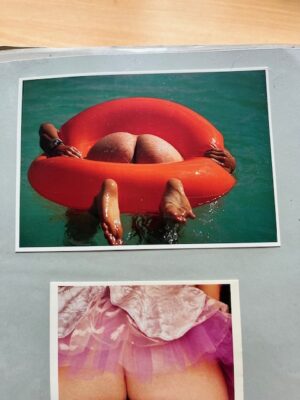
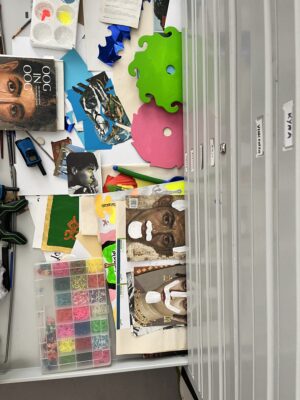
DS: Do you have a sense of what success means to you right now?
BF: If you manage to spend a big part of your life working on things you actually care about, that’s already a huge success. Getting recognition from the outside is also a huge honour – I can’t deny that. I’m not doing this only for myself; I like that jewellery is made for someone. It’s not autonomous in that sense – it needs a wearer, an owner. So the fact that people want my work is a really nice feeling.
DS: Do you think about the audience while you’re making the work?
BF: I don’t have a particular person in mind when I make something. As long as it’s not kept exclusive, essentially. I don’t want to cater to the wealthy.
I’ve had students who had to work at a bakery before coming to school – real people – and I much prefer that. It’s the same with where my work ends up: I don’t want it to disappear into a huge collection as one piece among a thousand. It’s more meaningful when someone genuinely appreciates it, and it’s important to me to make it less of a stretch for them to acquire it.
‘I like that jewellery is made for someone. It’s not autonomous in that sense – it needs a wearer, an owner.’
DS: What is your experience working with galleries?
BF: It’s a spectrum – from ‘put it right here’ to ‘do whatever you want’. I had a great experience with a gallery in Munich, The Tiger Room – they were very forthcoming; they were very forthcoming, let me design the display and had someone else make it. A genuinely professional experience, but that’s not common. Sometimes galleries hold onto old vitrines from the ’90s, won’t let you put anything on the walls – it’s limiting.
I’ve heard the same from others – galleries hoarding work, being exclusive about sales, even asking for a cut when you’ve shown the work somewhere else entirely. You really have to find ways to protect your freedom as an artist. That’s part of why I’m glad I have no gallery representation in the Netherlands – it gives me total freedom to do what I want in my home country.
DS: Would you rather see your work go out into the world and actually be worn, lived in?
BF: Definitely – but the gallery is often an important step in between, since they have a reach and a setting I don’t have on my own. Though that has changed a bit with social media – before, galleries were the only way to be visible. Now there’s a bit more empowerment, even with all the obvious downsides. At least you have some say in how your work is shown.
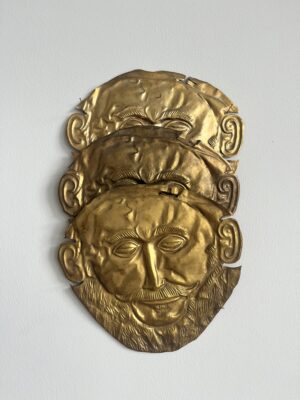
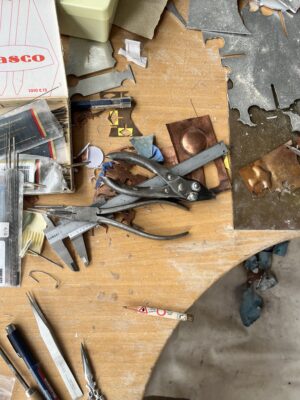
DS: Was it difficult to start using social media?
BF: I was very late to it. Marina [the co-founder and editor of Current Obsession] kept telling me, ‘Benedikt, get on Instagram,’ and I didn’t for years. Eventually I tried it, and if you don’t take it too seriously and just have fun with it, what’s the harm? People reach out, people see things, and you’re in charge of framing a little peephole into your practice, your interests. I like the way it lets me get a bit obsessed with people and see what they’re up to – not necessarily what they eat, but what they’re reading, what other artists they like. It’s an opportunity I didn’t have when I started – before, everything was in the galleries’ hands, whether they’d publish or show me. Social media gives me a say.
DS: To sum up – what’s next for you?
BF: That’s the thing, I never know. I’ve just gone back to the studio – is silk really the material I want to use? I honestly don’t know. I’m always jealous of people who have a bag of ideas they can just reach into. I want to do everything, but I never really have something in the pipeline. I have maybe a vague inkling of things, but nothing concrete. It’s exciting, and it’s very scary. I do have sturdy things to hold onto – teaching and Rudy – so those stay steady, and I can live with a certain amount of uncertainty in my own studio. That’s okay.
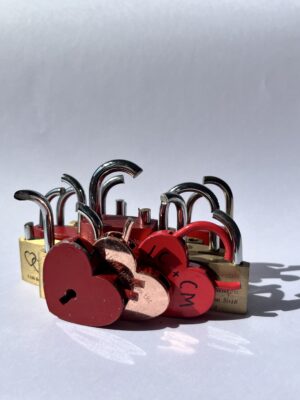
Revisit returns to artists featured across Current Obsession’s magazines and digital publishing, tracing how their practices – and the industries around them – have evolved over time.
* This feature is a follow-up to the 2019 interview, Piece of Mind, with Benedikt Fischer. You can read the interview via this link.
Cover Image
• Photo courtesy of the artist