The creative industry is unpredictable, and its paths are rarely linear, yet honest accounts from the artists working in it remain rare. Revisit is a series of in-depth artist interviews looking past the curated image, one conversation at a time – offering an unguarded look at what it actually takes to sustain a creative practice.
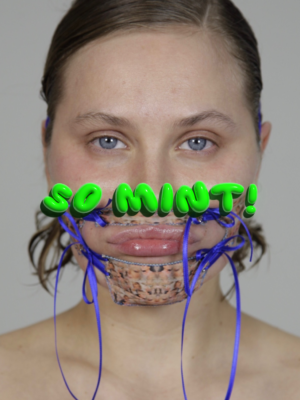
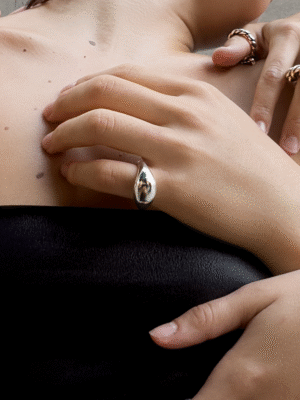
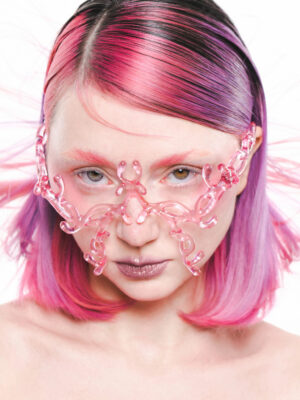
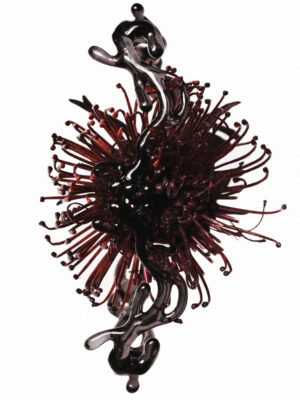
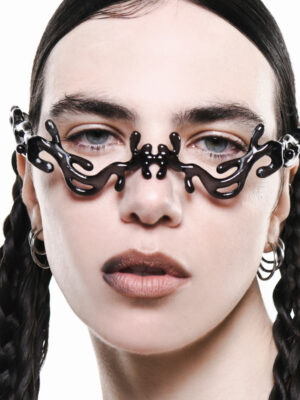
There are few better people to begin with than ines alpha herself. When we met her back in 2019*, she was pioneering the future of digital facial adornment, and with it, making a case for a more playful, expressive, and unconventional understanding of beauty. At a time when Instagram filters were still a novelty, she was actively reframing them as a tool for self-expression rather than self-correction. Almost a decade later, her priorities are firmly grounded in the desire to redefine our understanding of beauty and facial adornment, but her practice has expanded far beyond the screen. Just last month, ines launched her first collection of physical facewear, playfully titled No Filter.
Working independently and on her own terms to this day – its own kind of achievement in this industry – in the interview with Current Obsession, ines follows up on the AR landscape shifting beneath her feet, the leap into physical making, the pressure to produce, the discipline of slowing down and the responsibility that comes with experience: to set a sustainable standard and make space for the artists coming up behind her.
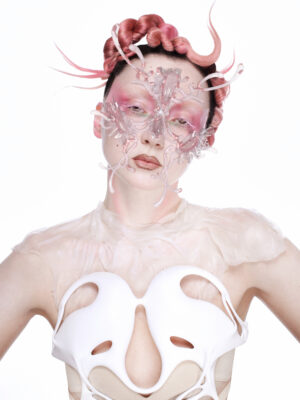
Dominika Szmidt: I have seen you refer to your practice as 3D makeup, digital art, hybrid art… But what feels like the most accurate description to you?
ines alpha: It’s a bit hard to pin down precisely. Firstly, I don’t want to be put in a box – even though, despite that desire, it’s something people just do. For instance, clients have mostly deemed my work augmented reality creations – which I’m kind of specialised in – but I don’t only do that, I also do CGI.
Nowadays, a lot of people, especially younger generations, have to navigate a world where you’re not necessarily specialised in just one thing. You have to hustle to earn a living, so you do a little bit of DJing, a little bit of art direction, and then you do a fashion collection, and so on. Everyone does a little bit of everything, which makes it hard to find just one name that describes everything you do.
If I have to describe my work in a few words to someone who doesn’t know anything about what I do, ‘digital artist’ or ‘digital makeup artist’ is the best option.
DS: Could you walk me through your journey leading up to 3D art?
ia: When I quit my advertising job, I had access to two years of unemployment benefits. I thought, okay, let’s just try to go full-time with 3D, and maybe that would lead me to work in a digital studio. And after six months specialising and dedicating my time to 3D makeup and 3D experimentation, I got my first client. I was really lucky at the time. But it also aligned with the boom of social media – the boom when social media was still, ‘quote unquote’ cool. That was in 2014, ’15, ’16. You could get a job, you could get real visibility through Instagram.
DS: The uncertainty of a creative job can be very draining. Beyond that, what do you consider the biggest challenges in your career?
ia: Well, the biggest challenge is staying sane and being able to say no. Being able to say no means having opportunities, which is great. However, it’s very important to protect your sanity. The more you say yes to everything that comes your way, the more you open the door to problems: burnout, overcommitment, and so on.
Another challenge I’m going through right now – and that I think many creative people are facing – is everything that’s happening in the world: inflation, recession, all of it. It’s a bit of a crisis. Brands have less budget and tend to take fewer risks, especially creatively. So there are fewer opportunities for people like us.
Since Meta shut down their AR software Spark in early 2025, clients have been far less interested in augmented reality projects. And that’s when I started thinking, okay, how can I present my work in a way that shows people what I do beyond AR? How do I show my whole personality and identity – not just the AR side of things – because I’m not just an AR specialist, you know?
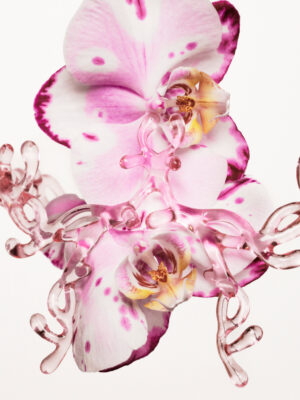
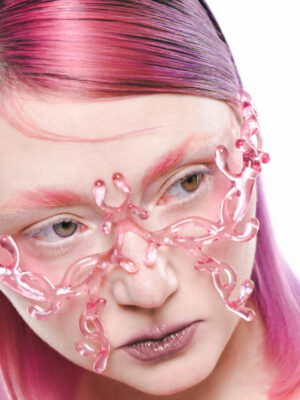
DS: Many creatives echo this point – the industry is fickle and demands creativity in marketing your own brand. What led you to branch out into physical products? Is that a recent evolution?
ia: Yes, it’s very recent. I’ve been wanting to experiment with physicality from the beginning; however, at the time, I didn’t have the tools. 3D printers were way more expensive. And I’ve always been really scared of making things by hand. That’s why I’m more comfortable on a PC and with digital artistry – I like to have everything in that one box. I feel like I can do anything with my computer. But with AR slowing down, I finally had more room to experiment in physical space. I’m not trying to actively reframe how people see me. It’s more instinctive than strategic.
DS: Is No Filter partly a way of expressing who you are beyond the digital medium? Or did it come from somewhere else entirely?
ia: No Filter is really my answer to one simple question: how can I make my work accessible to people in the physical world? It won’t be as immediate or as accessible as AR, but I’m trying to make it as easy and wearable as possible. That means keeping the prices approachable and designing pieces that are light, comfortable and easy to wear.
DS: What was it like to take that leap with physical products? How did the process of translating your 3D designs into real-life objects work in practice?
ia: It was a lot of challenges, honestly, but also a lot of excitement. I took that leap when I found out Womp launched a 3D-model-to-3D-print feature, and the second I saw it, I knew I had to try. I made my first model, printed prototypes, and the result was mind-blowing. It was also more affordable than I expected, which made small-batch production possible. Their materials fit my aesthetic really well, especially the opaque, semi-transparent, almost glass-like finishes that look like a 3D render in real life.
The biggest challenge has been comfort, making sure the facewear sits properly, fits different face shapes, and doesn’t slip. Functionality matters too, so I’ve also worked on details like hinges, so the pieces can fold and be carried easily.
I’m still facing other questions, too, like packaging. I’d love to find a pouch that protects the pieces, works for different shapes, and still feels beautiful enough that people want to keep it. And of course, sustainability is the bigger challenge I haven’t solved yet. Right now, the most responsible thing I can do is produce on demand and in very small quantities.
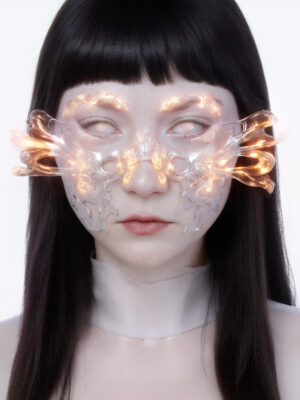
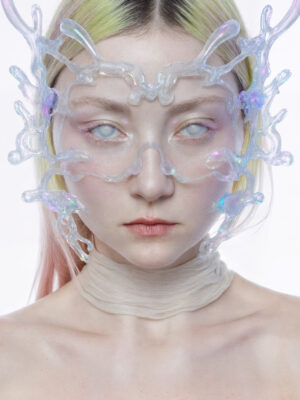
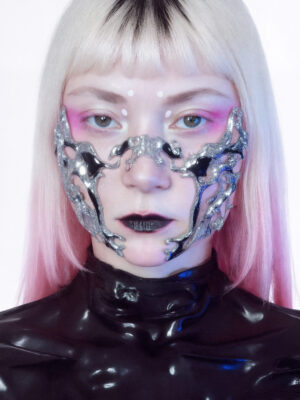
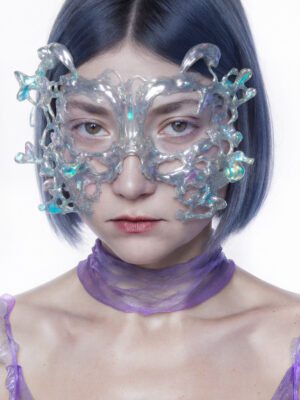
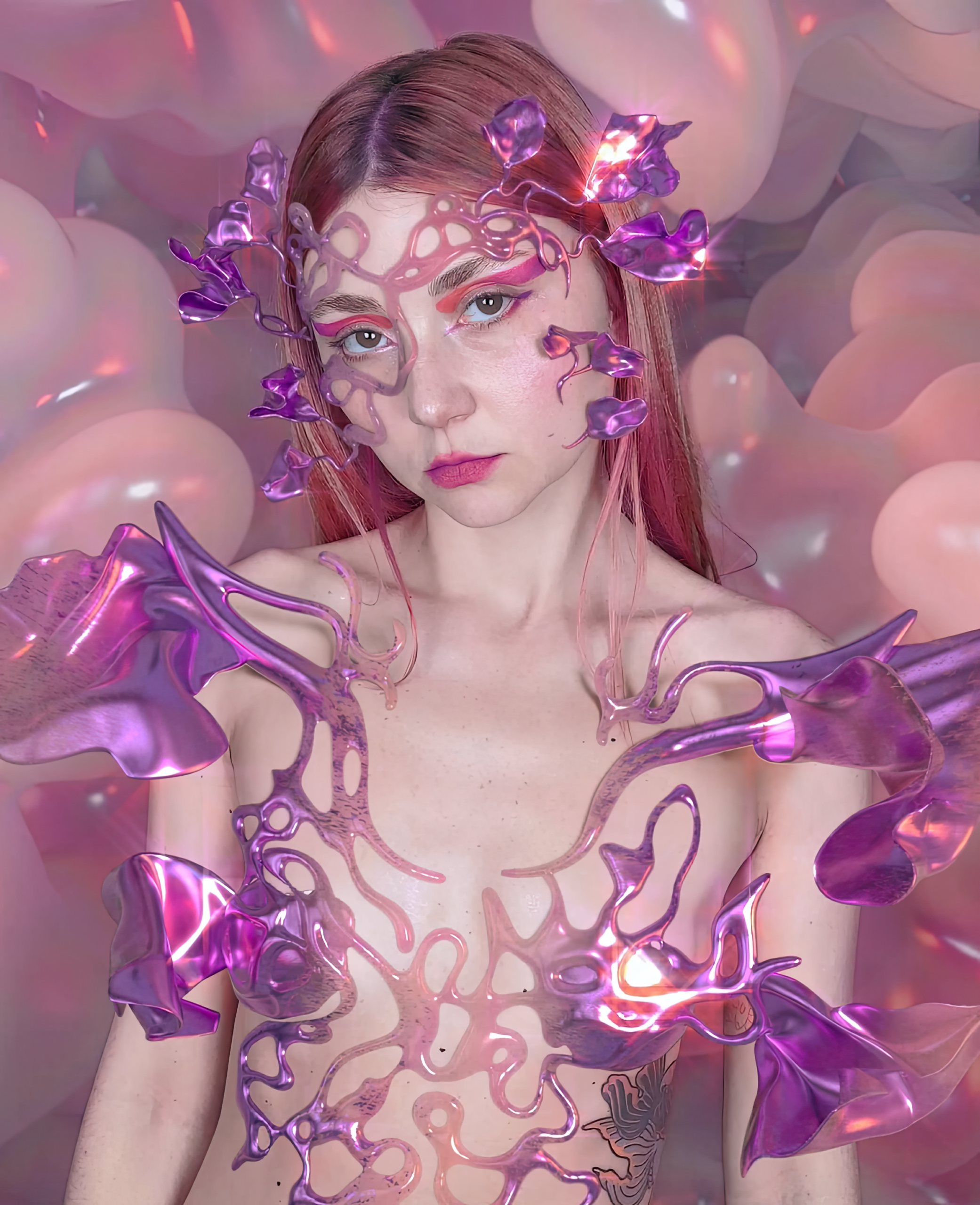
‘Face accessories are still not very normalised, and that’s part of what I find interesting about them. I wish they were more accepted, because I really believe that accessorising the face can be empowering.’
DS: How has the collection been received, and how do you see it fitting into your practice going forward? Is there a commercial dimension to it, and does that matter to you?
ia: The collection has been very well received, even though I know it isn’t an easy kind of piece to wear. Face accessories are still not very normalised, and that’s part of what I find interesting about them. I wish they were more accepted, because I really believe that accessorising the face can be empowering. That already existed in other times and other cultures, so it’s not a new idea, just one that has been forgotten or pushed aside in contemporary Western fashion.
For me, this isn’t a break from my practice; it’s a continuation of it. It’s definitely a new chapter, but it comes from the same desire to experiment and to play. There is a commercial side to it, of course, and I’d be happy if it sold a little, because it takes a lot of work to develop. It would also be encouraging to see that there’s room for this kind of freedom in everyday life. That said, I don’t want to put too much pressure on it. It started from a very pure artistic impulse, and I want to protect that.
DS: You entered the advertising world, carved a path for yourself there, and then changed careers and succeeded in your new endeavours too. What would you say has changed for you when it comes to the definition of success, compared to where you were at the beginning of your professional journey?
ia: I think the biggest success – or the thing I’m really proud to have achieved – is being independent. Being respected for what I love to do and being able to earn a living doing something I enjoy. That is priceless. Most people don’t have this kind of opportunity, so for that I feel very grateful – to myself, for having taken the risk.
DS: I have seen in one of your interviews that you said you hope 3D makeup could become a look we casually see on the streets. Do you think that could be a reality? Is it more of a dream, or what would need to happen for it to become one?
ia: I guess society would need to change. Especially right now, we don’t celebrate people who are different enough. And people who look different can definitely face difficulties just walking down the street. Unfortunately, that’s true in many countries. To be able to express yourself freely in public, you would need to feel safe first.
And even for myself, sometimes I don’t feel safe enough to fully express my final form – if there’s ever a final form – or another, more eccentric version of myself. So that’s something I would definitely hope for: just more freedom of expression.
There’s safety, but there’s also the norm – and the norm puts a lot of pressure on most people to just fit in. Because when you fit in, life is easier: people are nicer to you and more doors open. So I understand why people prefer to conform, because that pressure is real.
That said, I am hopeful that society will change. A lot of people want and need that freedom of expression, and a lot of people are working towards it. But for now, it might not be the majority – unfortunately.
DS: That is an interesting answer because I was expecting a technological one.
ia: That’s funny, because when I was answering, there was a voice in my head saying maybe you should talk about the AR industry – because that’s what I used to talk about. And I’m still hopeful for that future. It could be really fun. What has changed in my thinking, though, is that those big companies developing and controlling the devices we’ll wear to see the world through augmented reality don’t feel safe to me. All the data, the security concerns, the way they want to control everything – I’m not comfortable with that. So it’s hard to only stay positive and think that AR glasses are just going to be so fun.
‘With creative work … it’s about taking the time to observe, to not rush into an idea … with AI and social media, there’s again that pressure to deliver, to produce. But I think that’s counterproductive for innovation and for making something truly good, emotional, and personal.’
DS: I think you posted it on your Instagram, but I saw somewhere that you spoke about slow visual art. That got me thinking – how do you pursue that intentionally with a medium that is moving so fast right now, especially after AI?
ia: It’s like eating better and growing your own vegetables, or eating only organic foods, cooking your own meals. It takes time. With creative work, it’s very similar. I think it’s about taking the time to observe, to not rush into an idea. And as you said, with AI and social media, there’s again that pressure to deliver, to produce. I need to post three times a day, however many times a week, otherwise people won’t see my work. But I think that’s counterproductive for innovation and for making something truly good, emotional, and personal.
DS: I think it would be great if everybody collectively decided to just slow down. And I think it’s inspiring that you try to do that anyway as an artist. But I’m sure the pressure to deliver so much is pretty intense.
ia: Totally. I mean, it’s a kind of responsibility we all have, especially as more senior creatives. For me, it’s the equivalent of making ethical decisions. The more people accept lower fees, the more catastrophic it is for those trying to break into the industry, for the younger generation. It’s a big problem.
I don’t do many workshops – but every time I talk to younger creatives, I always say: please do not work for free. Do not accept low wages, because that sets the standard, and the standard is already very low. And so many people take advantage of that.
I think slowing down is the same thing. We have a responsibility to pave the way for others and show people that it’s okay to slow down – that it’s good, and it’s healthy.
DS: That is important – that’s actually a good thing to remember. You set the standard. One of my last questions, and a big one: where do you find inspiration? After all, you still produce a lot of work, and you mostly work alone. Where do you look when you need extra inspiration? Or does it come naturally, out of nowhere? How does it work?
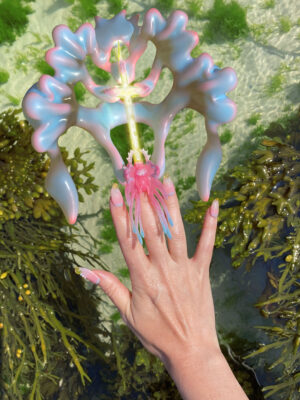
ia: Well, it never really comes from nowhere, because our brains and memories have digested a lot of information over time – through exhibitions, books, scrolling on Instagram or Pinterest. My main inspiration, I would say, is the aquatic world. I think that’s quite obvious. Anything sea-creature related is, first, just so soothing to watch, and second, something I love to bring to life with my own vision. I’m also obsessed with club kids and drag culture, and many kinds of makeup artists.
And sometimes, for specific projects, I’ll look for very precise inspiration. I’m also obsessed – probably because of my age – with the Y2K era. Everything futuristic – retro-futuristic, I mean – from that time. Super glossy, super optimistic about the future. A future that didn’t quite unfold that way, but back then, there was so much optimism, and that’s why the visuals were so, so cool. I love looking at those. They’re very soothing.
DS: Lastly – looking ahead, with new AI tools constantly emerging and the landscape continuing to shift, how do you envision the future of digital adornment? And what is next for you?
ia: I think digital adornment can stay playful and open. AI gives us even more freedom to experiment, and that can be exciting, because you can explore so many possibilities without needing to master every technical tool first. At the same time, infinite iteration can be a bit destabilising. I remember working on a personal project where my reflection started to feel unfamiliar to me, and that was strange – it made me question something very simple: what feels more real, the physical face or the version of yourself you project through an image?
As for what’s next for me, I honestly don’t know yet, and I’m okay with that. I’ve just launched No Filter, so everything still feels very fresh. For now, I want to keep following the flow of the work and see where the technology and my own curiosity take me.
Revisit returns to artists featured across Current Obsession’s magazines and digital publishing, tracing how their practices – and the industries around them – have evolved over time.
* This feature is a follow-up to the 2019 interview About Face with ines alpha and James T. Merry. You can read the interview via this link.
Cover Image
• Work by ines alpha @ines.alpha • Photography by Li Roda-Gil @li.rodagil • Makeup by Marie Vallée @mariemastuvu • Hairstyle by Lucile Bertrand @lucile.hair • Courtesy of the artist •