Madhawi Alzuabi is a Saudi contemporary jewellery artist and recent graduate of Central Saint Martins, BA Jewellery Design. Her practice is driven by curiosity and experimentation.
Her work explores ideas of value and what is considered precious in jewellery by rethinking overlooked materials that carry cultural significance. She is interested in how everyday materials can be transformed into objects of value while retaining their connection to memory, identity and culture.
Working directly with materials, she allows them to influence the making process and reveal their own possibilities. Through jewellery, she explores the relationship between materials, culture, and storytelling – questioning how value is created, both materially and emotionally.
As she establishes her independent practice, she continues to develop a material-led approach in which making becomes a way of discovering new narratives.
Current Obsession: Could you tell us the story behind your graduation project and what drew you to the subject?
Madhawi Alzuabi: My graduation project begins with growing up around my father’s date palm farm in Saudi Arabia, where dates are deeply embedded in everyday life – particularly during the summer harvest. With Saudi Arabia producing around 1.6 million tons of dates annually, this speaks to the scale of something so often overlooked.
During harvest time, we would pick dates and share them with family and relatives. In Saudi culture, dates embody hospitality and generosity, often forming the first gesture of welcoming guests. Growing up within this environment shaped my awareness of how something so ordinary can carry such cultural weight. These moments were filled with connection, yet they also led me to question what remains after the harvest – what is kept, and what is discarded.
While the fruit is highly valued and shared, the pit is typically thrown away without a second thought. This contrast became the starting point of my investigation: how is value assigned, and why can something so culturally present simultaneously produce something so overlooked?
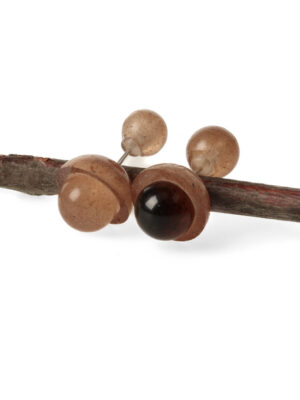
From there, I began to reconsider the date pit not as waste, but as a material that holds traces of place, memory, and origin.
In exploring these questions, I looked to artists who challenge ideas of value and preciousness. Otto Künzli’s Gold Makes You Blind conceals a gold sphere inside a black rubber bracelet, removing the immediate visibility of ‘value’ and asking whether worth lies in what we see or in what we assume.
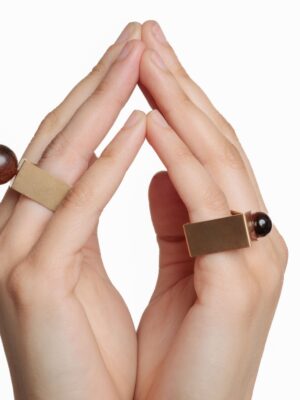
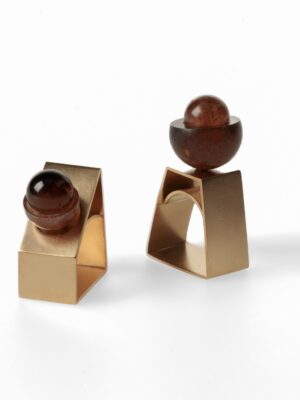
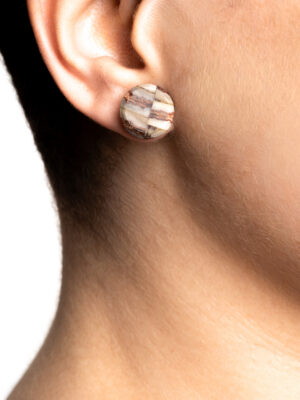
This project became a way to remain connected to my father’s farm while rethinking a material that has always surrounded me. Ultimately, it seeks to redefine value and preciousness in contemporary jewellery through a material developed from discarded date pits – an overlooked element, yet one deeply embedded in the cultural landscape of my home country.
CO: Beyond the gallery, where do you see your work taking root and finding its life? Who do you hope to reach with your work?
MA: I see my pieces existing beyond the gallery, moving into everyday life and being worn by people of different ages as part of daily interaction, rather than remaining static objects. I also imagine them being purchased and worn by people I have never met, allowing the work to extend beyond my personal environment and continue its life through others.
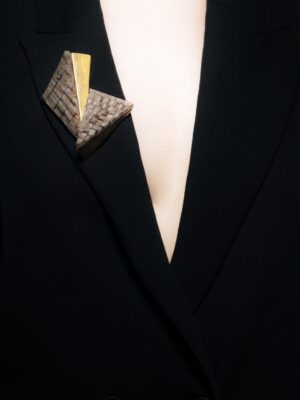
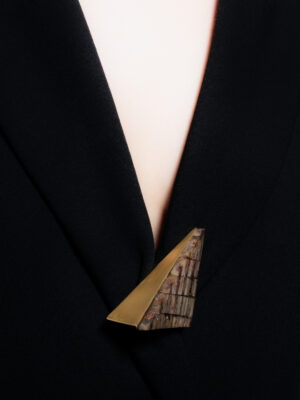
At the same time, I see them existing within exhibition contexts, which presented an important challenge: how to develop a new material that is both wearable and capable of holding a strong conceptual and visual presence in a gallery setting.
CO: What’s your favourite studio ritual?
MA: My main studio ritual is experimentation. I allow materials to lead the process, thinking through working with them rather than separating thought from making. I rarely begin with fixed sketches, as my understanding of the work tends to develop through direct interaction with the material itself.
When working with date pits in particular, experimentation becomes a way of discovering rather than controlling. I begin by handling and testing the material – cutting, grinding, assembling, reshaping – observing how it behaves and responds. This process often leads to unexpected results, which then become the starting points for further development.
By allowing the material to guide the process, I remain open to change and uncertainty. Rather than forcing an outcome, I respond to what emerges during making. This builds a closer relationship with the material, where understanding comes through repetition, touch, and direct engagement.
For me, experimentation is not simply a technical method but a way of thinking. It shapes how I approach ideas of transformation, value and material identity. Thinking through making allows me to continuously reinterpret the date pit – moving it from something discarded into something meaningful and wearable.
Ultimately, this approach defines my studio practice: one where materials lead the process and ideas evolve through making.